
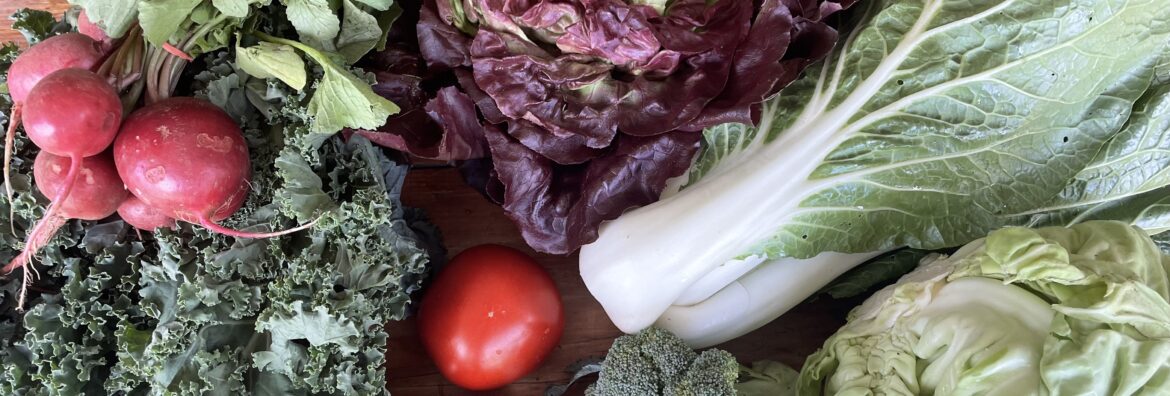
This week’s box includes: Radishes, tomatoes, head of lettuce, cabbage, broccoli (or cauliflower), kale, bok choy. You can see a photo that can help with identification on our Facebook page or check out our weekly video on Instagram.
Need storage instructions? Visit our fruit & veggie home pages. Click on the pic and a new page opens with storage instructions and a list of recipes curated by Conne Ward Cameron over the years.
————————————–
How exciting to see the first cabbage of 2026 in this week’s box! Cabbages are the king of long-keeping vegetables, rivaled only by winter squashes. They’ll happily wait their turn in a deep corner of the refrigerator, but eat while fresh for maximum flavor, moisture, and nutrition. In the days of yore before electricity, cabbages were stored in the ground, covered with cloth and straw.
The broccoli and cauliflower party continues; some boxes have broccoli, others cauliflower. If you’ve got a preference, take a discrete peak before leaving your pickup location with your box. Seems like all of the boxes at our pickup location had broccoli.
In our house this week, it’s a good bet that the tomatoes and radishes will disappear without a lot of forethought. Perhaps it’s time for the annual BLT party to celebrate the appearance of tomatoes + lettuce in the same box. Or this recipe for Dumpling Tomato Salad with Chili Crisp Vinaigrette, one of the most popular recipes on our website last summer. Chili crisp is a stunning condiment, deserving of its hype.
The kale is headed for this easy salad from Sarah Koch of the nonprofit DIG – Development In Gardening. Her latest iteration featured pecans, apples and shaved parmesan. Enlist the kiddos to tear and massage and they’re more likely to give it a try. Warning: our 14 year old loved it and can’t wait to try it with dried cranberries. Tonight.
Marinated Kale Salad With Fruit & Nuts
½ cup toasted nuts (pecans, walnuts, pepitas, etc)
1-2 apples or a pear, cored and sliced
¼ cup cheese (goat, parmesan, feta, etc)
¼ cup olive oil
¼ cup vinegar, white balsamic if you have it
¼ cup maple syrup or honey
Salt & pepper
Rinse and dry the kale. Remove the leaves from the center stems, reserving stems for compost or stock. Tear kale leaves into bite-sized pieces; toss into large bowl. Drizzle olive oil, vinegar, maple syrup over the kale, lightly salt and massage with your clean and dry hands to gently wilt the leaves. Top with fruit, toasted nuts, and cheese. Salt & pepper to taste.
***
Cauliflower is going to get pickled into a starter jar of Giardiniera along with some carrots and celery that are looking for a purpose in life. No cucumbers this week, but they’ll undoubtedly be back next week along with the spring onions needed to finish this recipe out. Lots more cauliflower and broccoli recipes are on our website, should you be looking for inspiration.
Lettuce recipe of the week honors goes to this one from the NY Times that Conne shared last year: Pan-Seared Chicken with Peas and Prosciutto and Lettuce. Lettuce shrinks when cooked so what seems like a lot of raw lettuce will look paltry after hitting the heat. Since the heads of lettuce that we’re getting are so very large, I’d start with half a head which will leave some for a salad and sandwiches. Maybe a nice Salad Nicoise with radishes, hard-boiled eggs, tomatoes and black olives. Fishwife tinned seafood (now available at Publix) has a spicy tuna that would be fun here. I found a recipe for Gut-Nourishing Salad With Creamy Peanut Dressing in our archives – looks like another winner.
I’m stoked about cabbage lately, largely due to this recipe that I made multiple times over the winter, from Kristina Felix via the NY Times Cooking app. Cabbage has now joined the litany of produce items that I would never have purchased in a store but now love because of the CSA landing it in my kitchen.
Roasted Cabbage Salad With Spice Lime Dressing
This salad keeps for up to 5 days in the refrigerator, making for quick and delicious lunches during the week. Try it on leftover pasta; substitute cooked pork roast for the tempeh if you prefer, add an over-easy egg.
1 small green cabbage, about 1 ½ pounds
Kosher salt (such as Diamond Crystal)
1 bunch scallions
2 serrano chiles
2 garlic cloves
6 tablespoons lime juice, plus more to taste (from 3 limes)
1 tablespoon fish sauce, plus more to taste
2 medium carrots
One (8-ounce) package soy tempeh
¾ cup roasted unsalted peanuts, roughly chopped
2 tablespoons avocado or olive oil
Freshly cooked long-grain white rice, such as jasmine, for serving
1 bunch cilantro or mint leaves (or a combination)
Heat your oven to 400 degrees. If you have a convection function, turn it on.
While your oven heats, quarter the cabbage through the core, cut away and discard the core, then slice the cabbage into shreds. Place on a sheet pan and sprinkle with 2 teaspoons salt. Squeeze the salt into the cabbage and arrange in one layer. Allow the cabbage to sit while you prep the remaining ingredients.
Trim the scallions, then cut off the scallion whites and cut them in half lengthwise. Place on top of the cabbage. Chop the scallion greens and place them in a large bowl.
Cut the stems of the chiles off and discard, then quarter them lengthwise. If desired, remove the seeds, then dice the serranos and place them in the bowl with the scallion greens. Mince the garlic cloves, then toss them into the bowl. Add the lime juice, fish sauce and 1 teaspoon salt. Grate the carrots into the bowl, mix and allow to sit while the cabbage roasts.
Transfer the sheet pan with the cabbage to the oven and roast for 10 minutes. Remove from the oven and crumble the tempeh on top, then add the peanuts and oil and, using tongs, toss to combine. Return to the oven and roast, tossing once halfway through, until edges of cabbage and scallions are browned and peanuts and tempeh are golden, 15 to 20 minutes.
To serve, transfer the contents of the sheet pan to the bowl with the dressing, and toss to coat. Taste for fish sauce and lime juice. Scoop a generous amount of rice into bowls and top with a very generous serving of salad. Top with cilantro or mint leaves. The salad keeps for up to 5 days in the refrigerator and is great at room temperature.
***
Finally, looking at you, bok choy. My plan is to make those Okonomiyai pancakes I’ve been threatening to cook – lots of them to freeze so that I can have them available for quick lunches, breakfasts, sides for dinner. Yes, the recipe calls for shredded cabbage, but it’s the bok choy that’s in need of attention in our kitchen so that’s what I’m using. Eight cups of it per batch!
Any remaining bok choy is destined for stir fry or grilling. My preference? This week it’s the grill. Quarter that head through the stem, leaving the leaves attached; lightly brush with olive oil before grilling. The combination of the bits of crispy char on the outside and the juicy stems is deeply satisfying. Grilled or stir fried, make it easy by prepping a sauce in advance like local entrepreneur Natalie Keng’s Homemade Soy-Ginger Sauce from her cookbook Egg Rolls & Sweet Tea. Even easier, find her jarred sauces in a nearby grocery store sold under the Chinese Southern Belle brand.
Homemade Soy Ginger Sauce
Makes about 1 cup
1 tablespoon cornstarch
½ cup water, divided
½ cup naturally brewed soy sauce
1 teaspoon grated ginger or ginger paste
1 teaspoon minced garlic
2 tablespoons sugar
1 tablespoon Hong Giou Michiu rice wine or cooking wine
1 tablespoon rice vinegar
½ teaspoon roasted sesame oil
In a small saucepan over medium-low heat, dissolve the cornstarch in 2 tablespoons of water, then add the remaining water, soy sauce, ginger, garlic, sugar, wine, vinegar, and sesame oil. Whisk together until the sugar and cornstarch are completely dissolved, and bring to a boil while stirring frequently for 3 to 4 minutes, until the sauce thickens and is shiny and translucent.
Brush over cooked vegetables or meat or use the cooled sauce for dipping.
***
Here’s to enjoying all of your veg this week!
~Suzanne