
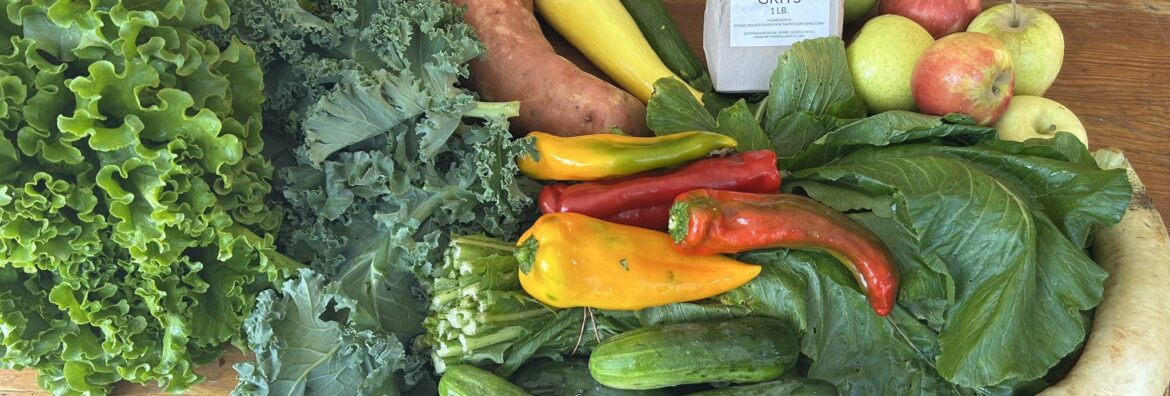
This week’s box includes: lettuce, kale (or mustard greens), turnip greens, sweet peppers, Chinese eggplant, sweet potato, summer squash, apples, daikon radish and grits! You can see a photo that can help with identification on our Facebook page or check out our weekly video on Instagram.
Need storage instructions? Visit our fruit & veggie home pages. Click on the pic and a new page opens with storage instructions and a list of recipes curated by Conne Ward Cameron over the years.
————————————–
It happens every year. One lonely daikon radish, left orphaned at a host location. I’m not certain why that happens, but possibilities might include “too many daikons at home already.” Ok, probably not that.
Daikons – the long white root vegetable that was in this week’s box – are a star of the fall vegetable pantheon. For starters, this patient vegetable will wait for weeks (ahem, months even) in the refrigerator, without visibly suffering. I fondly recall enjoying a forgotten daikon discovered in the depths of winter last year. Lucky day.
Daikon is an Asian radish. It has the peppery zing that’s most pronounced when raw; cook it and the tang mellows. Most common in Korean dishes like Bibimbap, daikon can be used in any dish that you would include radishes in. Easiest ideas are to grate it into whatever salad you’re making this week with that lovely head of lettuce. Dice it into petite cubes for more of a crunch. Or hold onto it until we get cabbage (coming soon) and make your own Kimchi. Thankfully, gochujang is now available at Kroger.
We receive daikon often enough that it has its own storage and recipe page. I obsessed over this pickling recipe for Daikon Pickled in Sweet Miso a couple of years ago. Other options from our recipe archives include Daikon and Shrimp Soup, which sounds delicious, and one of our favorite go-to recipes for daikons: Daikon Radish Fries, roasted in the oven. Feeling adventurous? Conne submitted this recipe for Daikon Cake years ago – it’s the same cake served in Chinese dim sum cuisine.
But. The grits are the star of the show this week. Sorry, daikon. Artisan Milling is the self-same operation formerly known as Riverview Farms Milling. Yep, these are Brad’s grits but even better now that he’s upgraded his mill and facility. We still grow the heirloom variety corn that’s incorporated into each bag. With his attention to detail, Brad is milling the best grits you’ll ever have. Kid you not.
Our website has plenty of grits inspiration including a rave-generating Sausage & Cheese Grits Casserole will make use of the peppers in this week’s box, or perhaps you’d like to spice it up with a little diced jalapeno from last week.
Back to basics first. How do you cook grits? Cooking grits is a bit mysterious. Keep in mind that it’s all about reaching the consistency and level of crunch that YOU like. A recipe (like the one below) can get you part or most of the way there but at some point you’ll need to make some decisions:
Control the consistency with how much liquid you add.
Control the crunch with your cook times.
Options vary from thin and crunchy (more liquid, shorter cook time) to thick and creamy (a bit less liquid and longer cook time). My favorite texture starts with a 4 parts water to 1 part grits, gently simmering for 35-40 minutes.
Creamy Southern Grits
3 cups water
½ teaspoon kosher salt, plus more as desired
1 cup Artisan Milling Co. yellow or white stone-ground grits
2 tablespoons unsalted butter
In a 2-quart saucepan, bring salted water to a boil. Sprinkle in the grits, whisking to eliminate any clumps. Return to a boil, then immediately reduce the heat to the lowest setting.
At this point, the grits will only need periodic attention. As they continue to cook, whisk or stir every 5 minutes or so to prevent sticking. Adjust the cook time based on your desired consistency:
30 minutes: Runny with a slight gritty texture
45 minutes: Thick, creamy, and smooth
60 minutes: Stiff, yet still soft and scoopable
If grits become too thick, whisk in a little extra water (1–2 tablespoons at a time). If they’re too thin, cook uncovered to allow excess moisture to evaporate.
Once your grits reach your perfect consistency, whisk in the butter until fully melted. Remove from heat and adjust seasoning if needed.
***
Clear as …. grits, right?
Once done, you’ve got a creamy corn-flavored canvas. Add a smattering of vegetables and an egg for a breakfast grits bowl. Sausages with caramelized onions and peppers for dinner. There are multiple shrimp & grits recipes on our site, including Shrimp & Grits from the now departed Highland Bakery, Grilled Shrimp and Smoky Grilled Corn Grits or this Shrimp & Grits from the chefs David Chang and Joaquin Baca of Momofuku Noodle Bar in New York
Cook a double batch of grits and use the leftovers in the casserole mentioned above, or bake Ma Ethel’s Mixed Bread, a recipe from long-time subscriber and baker Annie Peterle.
For the win this week, lastly, use grits instead of rice in this Chinese Daikon Porridge. To emulate a rice congee (porridge), cook grits to a runnier consistency. Sprinkle diced sweet red peppers, shaved turnip greens, and shreds of ginger root on top. Southern fusion.
***
What kind of salad are you making this week with that lovely head of green lettuce? Until next week, enjoy your veggies.
Suzanne