
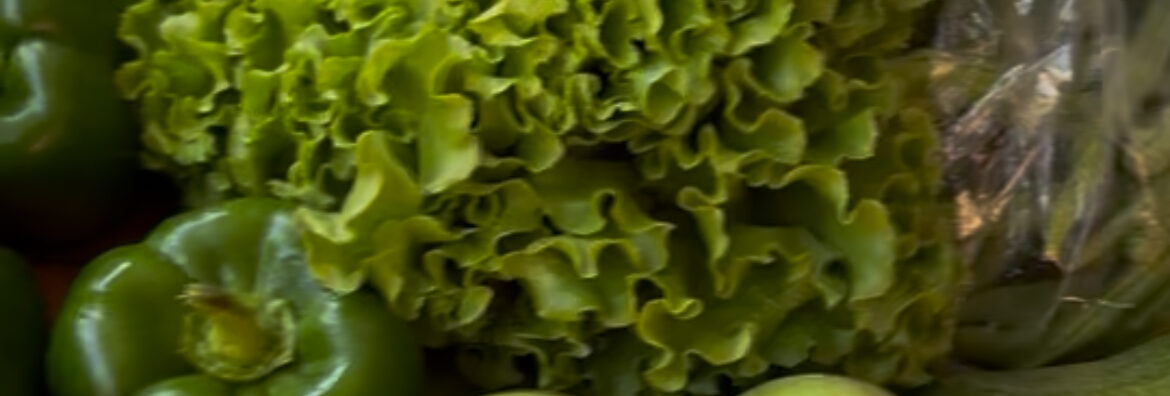
This week’s box included: lettuce, bell peppers, butternut squash, okra, summer squash, cucumbers, green beans, apples, potatoes, spaghetti squash. You can see a photo that can help with identification on our Facebook page or check out our weekly video on Instagram.
Need storage instructions? Visit our fruit & veggie home pages. Click on the pic and a new page opens with storage instructions and a list of recipes curated by Conne over the years.
————————————–
It was the summer of the melon and now it seems we’re at the beginning of the fall of the butternut/honey nut squash. Of course, there are dozens of butternut squash recipes at grassfedcow.com and down below is a winter squash pancake recipe that we’ve been enjoying – a great way to use either the butternuts this week or the honey nuts from weeks before. Those little squash will keep really well, but sometimes I like to just go ahead and roast a bunch and then freeze the flesh so I’m ready for soup weather … or pancake weather.
Lettuce and green beans return and we hear that peppers, summer squash and okra are on their way out.
And what I would have sworn was an overgrown delicata squash turned out to be a striped spaghetti squash. How fun. I’ll be making a spaghetti squash pie – a recipe we first put on the website 10 years ago after publishing it in the AJC. It’s a favorite for when you just want something other than a savory treatment for those fun squash.
If you haven’t already, log onto Riverview’s Instagram feed for Charlotte’s take on the different apple varieties that may have shown up in your box. Gala, Granny Smith, Golden Delicious, September Wonder … no telling what different apples are now in your kitchen. Last week she said to eat those apples quickly – these early varieties may not have the keeping qualities of later apples. I am getting out my mandoline and making thin, thin slices of apple, then dressing them with a honey-mustard vinaigrette (because that’s the preferred flavor around here) and adding chopped pecans and finely diced peppers. I could just eat a bowl of that for dinner, maybe with a slice of toasted, buttered sourdough.
And although this is the first lettuce of this season, you may want to do something different with it besides use those pretty leaves in sandwiches and salads. How about the Pan-Seared Chicken with Peas and Prosciutto and Lettuce below that uses about 6 cups of torn greens. Maybe not now, but set it aside for a few weeks from now when the heads of lettuce get bigger and bigger and your appetite for green salads may slow down. Yes, I keep frozen peas in the freezer – a holdover from what my mother did – and this would be delicious with thinly sliced pork chops instead of chicken.
Winter Squash Pancakes with Crispy Sage and Brown Butter
From Smittenkitchen.com
1 cup roasted and mashed winter squash
1/3 cup yogurt or sour cream
2 eggs
1/2 cup finely grated gruyere, comte or parmesan
3/4 teaspoon fine sea or table salt
A few grinds of black pepper
1 teaspoon baking powder
1 cup all-purpose flour
Butter or olive oil for frying pan
2 to 3 tablespoons butter
A pinch or two of salt
A few fresh sage leaves
In a large bowl, whisk squash, yogurt, eggs, cheese, salt, pepper and baking powder until smooth. Add flour and stir until just combined. Batter will be thick.
Heat a large frying over medium-low to medium heat. Coat the bottom with butter or olive oil, or a combination thereof, and spoon in pancake batter, a heaped soup spoon or scant 1/4 cup at a time. Press the back of the batter mound to flatten the pancake slightly. Cook until golden brown underneath, flip and then cook until the color until golden brown on the second side. If this is happening very fast, lower your heat. If you’re worried pancakes have not cooked in the center, you can finish them for 10 minutes in a 250 degrees oven. You can also keep your pancakes warm there until needed. Repeat with remaining batter.
To finish, wipe out frying pan and place butter, a pinch or two of salt and sage leaves back in it, heating over medium. The sage leaves will crisp and the butter will brown in a minute or two so keep a close watch on it. Pour leaves and butter over pancakes and quickly understand why you’ll never have them another way.
Pan-Seared Chicken with Peas and Prosciutto and Lettuce
From The New York Times
4 boneless, skinless thin-sliced chicken cutlets (about 1½ pounds) (or boneless Riverview pork chops)
Salt and black pepper
4 tablespoons olive oil
4 tablespoons unsalted butter
1 small shallot, chopped
2 cups frozen or fresh peas (about 10 ounces)
1 head lettuce, torn into pieces (about 6 cups)
4 thin slices prosciutto, torn into pieces
2 teaspoons sherry vinegar
Working with one cutlet at a time, pat chicken dry and place between two pieces of wax paper or plastic wrap. Use a meat mallet, small heavy-bottomed pot or rolling pin to gently pound the thicker parts so the cutlet is an even thickness of about ¼ inch. Season both sides with salt and pepper.
Heat 2 tablespoons olive oil in a large pan over medium-high until it shimmers. Working in batches if cutlets are large, add chicken in a single layer. (It’s OK if they are touching slightly.) Cook, undisturbed, until almost entirely cooked, bottoms are browned and the cutlets release easily from the pan, about 3 minutes. (There will be just a small area of pink, uncooked meat on the top of each cutlet.) Flip and cook for another 30 to 60 seconds, until just cooked through. Remove chicken to a serving plate. If cooking in batches, add more oil as needed for the second batch.
Lower heat to medium and add butter to the pan. Once the butter is melted, add shallot and cook until softened, about 1 minute. Add peas, 1/4 cup water and a pinch of salt and simmer gently until water has mostly evaporated, about 5 minutes. Add lettuce, prosciutto and remaining 2 tablespoons olive oil, then cover and cook for 5 minutes, until peas are tender. Stir in vinegar and remove from heat.
Immediately top the cutlets with the prosciutto-pea mixture and serve.